Today we are sitting down with Glenn Pascoe, founder of One4Another, a Canadian charity that provides life changing surgeries for children in Uganda. What began with helping six kids has grown into a hospital that has facilitated over 3500 surgeries since 2012 with 573 in 2024 alone.
But Glenn’s story is not about swooping in to save children. It is about how his own struggles including divorce, depression, and searching for purpose pulled him back to Africa, where he discovered that healing can be reciprocal. The kids and families he serves have given him just as much as he has given them.
In this conversation Glenn shares the realities of starting a grassroots organization with no resources, the importance of trusted local partners, and the challenges of sustaining hope through obstacles like COVID, economic downturns, and skepticism. He also talks about the timing of life events, the pull of purpose, and the advice he would give anyone feeling stuck.
This is a story about resilience, empathy, and the power of answering a call you cannot ignore. If Glenn’s journey does not stir something in you, you were not paying close enough attention.
Here are just a few of the themes we explore with Glenn:
- How six surgeries grew into a hospital serving thousands of children in Uganda
- The life changing impact of affordable surgeries and access to healthcare
- Glenn’s journey through divorce and depression and how it led him back to Africa
- The power of reciprocity in charity work and building One4Another on trust and local leadership
- His advice for anyone feeling stuck and pulled toward something bigger
We hope this conversation leaves you as humbled and inspired as it left us and that Glenn’s story sparks reflection on what it means to find purpose, to give, and to receive.
Episode Links:
One4Another Website
One4Another Instagram
#1 Draft Pick
Sponsor a Surgery
We’d love to connect with you. Here’s where to find us:
Vienna Waits Website
Subscribe to Vienna Five Newsletter
Waypoint Retreat
Vienna Waits on Instagram
Greg’s LinkedIn
Whitney’s LinkedIn
Every other Thursday, we talk to people who got UNBLOCKED. You'll hear stories about finding clarity, career paths, career pivots and living with intention. Our guests tell us how they realized something had to change, made bold moves, and built lives that feel more aligned, more alive, and more intentional. We’ll share some of our own stories too, because we’re right here, figuring it out like everyone else.
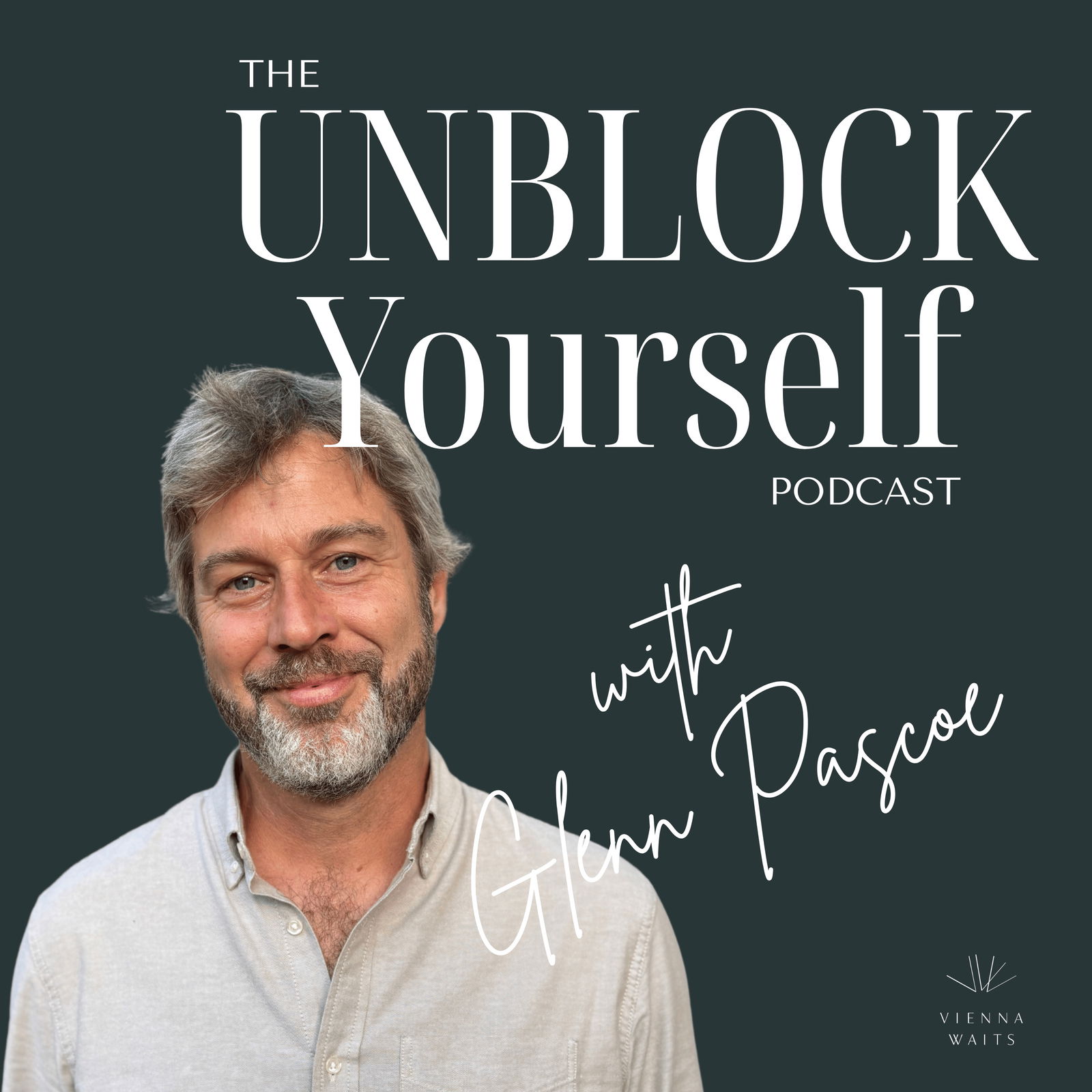
Glenn
The origin for me, anyways, has always been a reciprocal relationship between us as, say, supposedly the helper and then the people in Uganda supposedly being the ones being helped. But in my case, it was very clearly a situation where I was being helped or there was a benefit to me that was equal to, if not greater than, the benefit to anybody in Uganda. So the idea of one for another, it doesn't matter who's who's giving and who's receiving. It's that there is a beauty and, there's health and well-being when there's a reciprocity, and it's not a one way street. Whitney
Welcome to the Unblock Yourself podcast, where we sit down with people who are chasing their dreams and bringing them to life. Today, we're chatting with Glenn Pascoe. Glenn is the founder of an organization called One For Another that serves children with surgical needs in Uganda. Medical care is not free in Uganda. Children who are born with or maybe acquire a surgical condition are at risk because the cost to correct their condition is beyond what most families can afford. When Glenn first started this work, it was really only to help just six children. He could have never imagined that he would start an organization that has now built a hospital in Uganda, And twelve years later, they served over thirty five hundred young children in life altering and in some cases, life saving surgeries. Glenn's story isn't one of a hero who went to another part of the world to save young children. It's really about the challenges he himself was facing in his own life and how doing this work helped him so much. Glenn's story is incredibly humbling and it's guaranteed to move something inside of you. And if it doesn't, you maybe weren't paying close enough attention. So we hope you enjoy this conversation with Glenn. Speaker 2
I I think that Whitney Whitney and I are we strive to be really empathetic people, open minded, but we, I think, don't. Yet be reminded sometimes of the privilege that you have, in order to just be grateful and have this deep empathy. And preparing for this, this conversation has just put us into a into a, I think, a great mindset because it's the work that you do is really humbling to people that live with such privilege Okay. Speaker 2
people who you impact. And so this is we're this could be hours long, I think, is the point of of what I'm saying because there's so much to something into. Speaker 2
Great. The kids were fussing about having to do some dishes after watching a video, testimonial that that had shared, and I lost my complete shit. Okay. Because I don't even know how. Whitney
Yeah. They're like, who are you interviewing today? And I'm like, oh, like, his name's Glenn, and this is the work he does, and I was showing them. Yeah. And then yeah. So right after them. Glenn
Yeah. The kid the kids over here are always very receptive when I tell them that in Africa, things are not are different. They've they really love, hearing that. I'm actually kidding. Whitney
Yeah. Well, I have a bit of a personal connection to, to one for another. And my son's been playing hockey for years, and there's always, fundraising and different things that we're we're doing. And it was a couple years ago now, but he ran we ran a fundraiser. It was called the eighteenth man or the eighteenth player. Whitney
And it was through, yeah, through your organization, but it was Great. Yeah. It was really cool. So we raised money to help a family pay for their son's surgery in Uganda, and it was awesome. Like, I think we sent a jersey and, you know, he was always kind of, like, part of the team. And they'd share pictures back and on the progress and the surgery. So it was it was incredible. Like, I think to this day, it's still one of the most impactful, like, memorable fundraising, things that that the team had done. Glenn
Oh, that's that's great to hear. Yeah. That that was an initiative that's really, took off in many ways and caught me by by surprise as its effectiveness, and also just the the beauty of engaging kids here and helping kids over there, like, together. Whitney
Yeah. I agree. For them to have that context, again, we're, you know, very privileged. And so for them to be able to make those connections kind of across the world, literally, it was just really it was really neat. Whitney
Is that so that's a program that's still running? Glenn
Yeah. Yeah. It's, we call it the number one draft pick now because we have teams of all sorts, like, not just hockey and also not not just boys. So one number one draft pick, whether it's boys or girls team or any team. Speaker 2
Well, I think that connection, I remember, Cole, knowing the name of the of the person who he is supporting and helping and having these visual reminders, I think, made it personal and impactful in a way that was meaningful. And I think we're talking about it a little bit, but I think let's just get right into it. So one for another, is the is the organization just tell us what it what the organization is, the mission you're on, and, of course, your role in it, Glenn. Glenn
Yeah. Yeah. Sure. I I originally, got a love for Africa in nineteen ninety six, So it has to start there, because that was the summer of my second year of university. And I went with a family friend, Danny Heyho, to to Malawi, which is also East Africa. And at the time, I was in the middle of, undergraduate degree and didn't exactly know what I wanted to do. But that trip unearthed this deep feeling of love and just feeling at home in a place that was totally foreign. All of my sensibilities were sort of awakened over there. And, so I didn't know what I was doing per se, but I loved the experience. And from that, went on to change my my major and was gonna be a bible school teacher in Malawi that from that, experience. So I came back and did a biblical studies degree and then went to a seminary, based on that experience. But, you know, life has a way of of changing, not going in the way that you thought. So, I got married and we it ended up that, I shifted into chaplaincy work in a hospital instead of, pursuing that. So still used my my my education, but it shifted a bit just due to life. So I'll give you some context just because it might help show that although life doesn't go the way you perhaps want it to or expect it to, it it can turn out, you know, remarkably close to what you always dreamed of. In two thousand nine, my marriage fell apart out of the blue. And so I I struggled after that to to make sense of my life and the trajectory I was on. And one of the ways that I decided to try to sort myself out was to go back to Africa because I hadn't been able to go back, ever since that experience. So I just wanted to test the waters and see, you know, is that love still there? Do I still think that maybe there's a role for being in Africa in my life? And so that was two thousand eleven then that I went with a with a friend who does volunteer trips there. He has an organization locally that helps people get to to Uganda in particular. It's an English speaking country, so that helps. And, that from that experience, I decided I would take a leave from work. I I was working at the House of Friendship. And from that initial trip, I thought I'll take a leave for three months and really dive in and see if this is something that I would like to pursue. Now at the same time, and hopefully this doesn't just get, kinda long and and, convoluted, but I in the wake of the divorce, I entered into a profound depression and couldn't actually go to work, anymore. And, so, I went on a leave, and, and and that opened up a door to go to Uganda for a longer period even though maybe it wasn't advisable. And and being there did help bring me back to to some grounding emotionally and got was able to, come back and actually continued working part time for a while, at House of Friendship. But it was during that three month stint that I I, I had parents bring their some some of their kids to me and say, my child has a hernia. My child has a broken, leg, or whatever the situation was. Can you help me? And not being a doctor, not being a medical person, I I said I can't help, but let's go to the clinic and see what they would say. What what's how how would you get it fixed? And, through that, found that for a relatively small amount of money, a child could be treated, and have their conditions treated for, so that the rest of their life was was, considerably altered in a positive way. So, say, for two hundred and fifty dollars or five hundred dollars, something that would have limited them for their life, could be corrected. And so that's how that's how it started.
Whitney
Wow. Just even you saying, you know, the surgery that could be life changing for them is two hundred and fifty dollars, which, of course, it's not a small amount of money, but it's a small amount of money to a lot of people, you know, that are as privileged to as we are. And so, yeah, that's just incredible that, it's a lot of money to them. Right? And and they can't afford that care for their children.
Glenn
Yeah. Yeah. I I felt the same. I remember having an experience once where I went to a guy's golf weekend, you know, and we do this in the fall. And I remember going, and golf costs quite a bit of money, especially if it's at one of these these nicer places. And I remember coming away from that weekend thinking, like, I could have sponsored, you know, a kid's surgery for the cost of some horrific golf games. So, yeah, that's where I started thinking. You know, maybe this isn't such a bad, model for for, an organization would be to to say if you wanna help this particular child, it's gonna cost this much money. Because most of us, you know, do things and spend money on stuff that, probably isn't as significant as that. So
Speaker 2
Glendy, was it your sister who is there with you at that time?
Speaker 2
Okay. So you you're there with your sister, and you're approached I mean, you just step outside of what would have been your comfort zone completely and say, okay. I'll see if we can help these kids. But then you just something stuck for you clearly that are it just you couldn't let that go. I think lots of people travel and get inspired and, oh, you know, I wanna move there one day or I wanna change, and then we just go back into what what can you think of what it was that that stuck?
Glenn
Yeah. I've had that experience too where I've gone places and come back and thought, oh, I'm I'm I'm gonna do such and such, and then three weeks later, you know, it's faded. But my situation in the Africa, for anyone who's been, is a very it has a power there. It's very compelling. The place and the people are are not easily forgotten. That's one thing. The needs are not easily forgotten. But I would say the timing in my life, I also needed it in a way. I'm not sure how you know, Africa may have needed me a little bit, but I needed it more, for my well-being. So it was a time in life where, it was something that I need to grab onto, and my sister, Wendy, was the one who moved it forward. She was the one who said, you love it there. I can see you do much better there, health wise. Why don't we try to keep at least something going, from what we've experienced there? And so even if it's having a garage sale every once in a while, raising a little bit of money and working on one child. There was no thought of becoming an organization or or having a a future for that matter. It just was, why don't you why don't we keep doing this because it brings you and brings us joy and and a sense of meaning. And so one step led to another, and that's that's the story of our beginning is that at every step, I kind of resisted the responsibilities of, say, having an organization or becoming a charity. But at each step, you realize, okay. Well, if we're gonna go to the next step, we need to get x done. Getting a charitable status was a big one, because then you can give receipts to to people, and that makes a difference.
Whitney
Yeah. Actually, I was reflecting on that. It seems very complex to start up an organization in a different country. It's a com like, completely different medical system. How did you do that?
Glenn
Starting an organization, at the beginning seems kinda complicated because there's a bunch of stuff that you've never done before, and now you're about to do them, and you're the only person doing them. I'm not a bookkeeper, but I I have a handle on the books. I'm not technical, but each of the building blocks of an organization, like a website, social media, and some sort of database, and then oodles and oodles of spreadsheets, like, you've you've you cobble it together and you figure it out, and over time, you can make it, you know, somewhat professional. But over that length of time, you're right. A lot of very challenging things happen. COVID was the dark time Mhmm. For everyone. But not just COVID, but economic times in general, like I would even say now, where it's still we're also you know, things are uncertain. You can't predict, and you don't always know whether if it was going great three years ago. You don't know how it's gonna go next year. And in charity work, you you you have repeat donors and a donor base, but it's not it it's it is contingent upon the economics of the time. So once I develop a little bit of faith in the cycles, I can get through drier times easier, but I still worry at night and and wonder how are we gonna pay for stuff. But it'll come out of that just like it has every other year.
Speaker 2
And it'd be interesting to hear your perspective on the balance that you had when you were still with House of Friendship and building this. Like, this wasn't an overnight success story. You know, your side hustle was building an organization that was, in some cases, saving children's lives, changing lives in another part of the world. So assuming it would have been easier just to stay at House of Friendship, but you chose to go and do this full time, what led to that decision or what got you to that point where this became a full time position?
Glenn
Yeah. So when as I said, when I started, I was always just sort of taking the next logical step. And so you you work you work that into your life. And then as the organization got bigger, I was I was realizing that my job, my day job was really getting in the way of, like, getting stuff done and like, being able to get organized with the size that one for another was becoming. So, something had to give. And so House of Friendship was gracious in letting me go down in hours and and then over time and then I think went full time maybe around two thousand eighteen or seventeen something, somewhere in there. So, you know, one went down and the other started coming up. And you need a bit of footing underneath you, like, financially, obviously. Like, you can't, like, you can't just step off the cliff. So I had a a support team that allowed me to do that.
Whitney
That's incredible. So these first six children that you helped, are they are you still connected to them, or do you keep in touch with you are? Me. And I can't imagine they're children anymore.
Glenn
No. They're not. That's the thing. We had a ten year anniversary gathering at the at the hospital the a couple of years ago, and many of them came. And we still in fact, I was just there in June, and Willie, one of our kids from, from from those early days. He comes every time I visit, and he checks in with me and updates me on how he's doing. So many of them stay in touch. Not all. Life in Uganda is complicated. People move away. Economics are hard, but a lot of of the kids, stay in touch. And and, like, this boy, Willie, we worked on him when he I think he was ten, and now he's, like, twenty two. So he's like a grown man.
Glenn
Yeah. He's an electric he's an electrician. He has a job. We helped him a bit with school. We found him because he was on the front page of the national newspaper in Uganda with a terrible picture of him with his intestines prolapsed out of a colostomy on his side. And the caption read, boy being eaten by rats at night. And that was due to having a a an unmanaged colostomy because he had a, a condition where he couldn't pass stool regularly. We followed up with the person who was doing the news that news report because we were struck by it. And you can see how the work kinda grips you, and you just go with it because, like, what else are you gonna do? You're gonna this is not difficult work to be motivated to do.
Whitney
Oh my gosh. Yeah.
Speaker 2
One for another was able to provide care, and now he's an electrician living his life. It's what an incredible story.
Glenn
Yeah. No. Not all stories are, like, you know, health and well-being is a complicated thing. Even here, if you're going through a difficult health situation, you know, anything can happen. But, we try to I, you know, I try as best I can to focus on all the successes and the things that work out well and and then try to improve on the things that don't, you know, learn from them.
Speaker 2
Hey there. Quick pause, and we'll get right back to the show. In January, we launched a program called unblock yourself, and it was for people who wanted to build or create something in the world but hadn't done it yet. Since then, we've run three groups, and unblockers have launched businesses, changed careers, and started community initiatives. If I'm honest, we wanted it to be good, but it's been even more powerful than we imagined it could be. Our final group of the year kicks off on October second and is gonna help another group of people people get into action and bring their ideas to life. If anything I've said in this scares or excites you, it might be just what you've been looking for. Learn more at Vienna weights dot com slash unblock yourself or email us at unblock yourself at Vienna dash weights dot com. Alright. Let's get back to the show. If we could come back a little bit, Glenn, to some of those challenges you might have faced because the work itself, once you get into it, would be so motivating. I think both of us are sitting here. I think there's gonna be so much for us to decompress that after the conversation just with the stories and the impact the organization has. But staying motivated and staying moving in providing these services would have required overcoming all kinds of obstacles. You alluded to some of them before. Uganda is a complicated place. You're living,
Speaker 2
know, on the other side of the ocean right now, so you you must have people running the program. You're here. They're there. What are some of those challenges that you've had to navigate to get the organization to be sustainable, to have people being served, or three thousand children that you've served over the years, and you're we're talking to you now in in Rolla here in Ontario. What are some of those challenges that you've overcome?
Glenn
Yeah. Like, so many things could have gone wrong or so many things have over the over the years gone wrong, but, I would I would say for us, we were fortunate in one in in several areas, but one for sure is having the nurse who we originally were con we originally hired to, navigate the health system and take on the child and coordinate the surgeries. If it wasn't for her, the organization would not have gone anywhere, for sure. Her name's Olivia. She's our director to this day. And she just graduated nursing school at the time. And I asked a friend of mine, Abdu, who I was just doing some little project with, said, do you know any nurses? Because we've had these parents bring some kids to us, and Wendy and I would like to keep trying to do that when we go home. So he said, well, my sister-in-law just graduated nursing school, and she she doesn't have a job. So she would be happy to do it as a volunteer. Remember, we don't we didn't have money, so it's not like we really had a job per se. We had a volunteer position, open. And so she did it with no hope of a salary or no hope of a job. We weren't a bonafide organization by any stretch, for, like, three or four months, without any pay. And it was that that got us off the ground, and then it's been her reliability and trustworthiness and her dedication of the work that has made has given us the chance to be successful. Because lots of people will say you can't run an organization from here, over there. Mhmm. Our experience is that with the right people there can def it can definitely work. In fact, sometimes when I go, I feel like I get in the way, and I do get in the way of them getting their work done. Like, the the Uganda side programming is my favorite by a long shot. I I get frustrated and angry more in Uganda than I do here, but I'm also so I'm filled with so much, satisfaction and purpose, and the the relief even of getting something done there is immense.
Whitney
Yeah. I think I'm I'm still so fascinated with you going to Africa when you're in university and then going through this big life event and, you know, getting divorced and all of that and something drawing you back there to find yourself. Like, there's something so magically beautiful about that. What was pulling you to Africa? And I don't even know if you can answer that, but it's just it's fascinating that you had that intense pull.
Glenn
Yeah. I'd never had an experience like it before in my life. It's not I'm not a person who is forever feeling like god is god's light is shining down upon me. In fact, that might be the one time where I did feel that, but, it it was something I had to return to, because of this this. It it it gripped me. But I think there's also the element of per I'm someone who needs purpose in a fairly deep way. So when I joined the the sheer joy of the place and the life giving nature of the place and that love for the place, and love in the interaction with the people, together with the need, then I kind of although I'm not gifted in so many areas of the organization, I I am I do have at least the gift of holding a whole bunch of stuff together and and sort of making it work, together with the needs. So those two things, when they join and there's overlap, then that sort of is, it's bringing your your gift or your love together with the needs of the world. And wherever that is, that's where you sort of belong. That was the way it was for me with Uganda.
Whitney
So good. I just I'm gonna need to decompress after this for sure. It's just, yeah, beautiful.
Speaker 2
We wanted to have this conversation with you, Glenn, because the thing that we're after in a lot of these conversations is people might feel drawn or pulled to something, but then they don't. Maybe they're maybe they can't. Maybe they're afraid. Maybe they they don't feel that,
Speaker 2
know, divine light shining down. They don't feel that sense of purpose, whatever it might be. And so if you're to kinda summarize, if if somebody came to you and said, hey, Glenn. I'm feeling that sense of being stuck, or I'm feeling this draw to do something. What advice might you give somebody?
Glenn
I don't know that I would be very good at helping someone find their passion or find their purpose, but but I I would have some a few things to say about anybody who has any inkling. I would say that those that little thing over there that you are willing to do in your free time for free, that is not really work. It's it's it may be work, but it fills you in a way that, you know, your regular life doesn't. I I would say that's something not to, lose sight of. The exact thing itself is gonna change a bit. Like, I didn't like, you know, you I I started going in this direction, and it shifted here, and then it kinda went over here. And I'm not even a doctor, and yet we're running a medical program. So it tells you that if you start by saying, okay. Well, you you're clearly good at this, and you love this, and you're qualified for this, therefore, you should do this. Well, it's not exactly like that. You you head in the direction of what you're pulled to, and then the next step will kinda show itself. And then you and you follow that trajectory. And each at each stage, you make the best decision you can with where it's taking you. But the bigger thing, I think, would be to say that when you face hardship or discouragement, that's where most people would end or a lot of things end. You have to have a way of dealing with discouragement and skepticism of what you're trying to do. Yeah. Because those are powerful forces that'll just knock you out right off your momentum and your trajectory. And, like, I I have the blessing of being pulled by the work. Like, even if I'm not feeling like it, I'm pulled because there's, like, a specific need that I'm trying to fill. And if I don't, then a lot of people are involved, like, not just just me and not just the kids and their parents. But so I don't know. It's like once it gets moving, then you can't stop it.
Whitney
Yeah. Yeah. There's this quote that I just thought of. I had to look it up here, but it's if you can't figure out your purpose, figure out your passion. For your passion, we'll lead you right into your purpose. There's something that resonates with that with this conversation.
Glenn
Yeah. Yeah. Yeah. But it but the critics or the discouragement or things not going the way you want, like, that's just life. How do you handle that in life? I can't say I always handle it particularly well either, but you have to get up in the next day, and and you'll feel different about it tomorrow than you do today. No. Take another step and and then things happen again and you get the current of of positivity and that energy back and and you go again.
Whitney
Oh, Glenn. I feel like we could keep this going forever. I just I'm enjoying this so much. But, one thing, Glenn, we do ask, just all of our podcast guests. Is there a book or maybe a podcast or something you might recommend to people that's been impactful for you? Glenn
I thought, yeah, I was thinking about this, and I, I I read depressive poets. So Glenn
Not really. Don't re I'm not like a motivational speaker or, like, you know, John Neufeld who you who you who's you had on here, and he's a dear friend, but I'm I'm the opposite of him. But we still both can lead organizations, and mine, obviously, much smaller than where he was with House of Friendship. But, I'm not a type a, how to hear the seven steps to personal success and and freedom. I'm just I'm also just you know, I re I like poetry, and I I like working with wood. Whitney
That is great. I love that. Speaker 2
We will take it. But would there be and may maybe this is it because we had we had a guest on recently, Jennifer Moss, who shared the one of the greatest ways to build empathy in the world is to read fiction, and the other is travel. And you certainly have done the travel. You've certainly built a tremendous amount of empathy. So maybe that poetry would be helpful to anyone who listens to this and to us included. So is there any poetry you might recommend? Glenn
Well, I any anything written by Wendell Berry, I love. Frederick Beechner is a is a novelist and former pastor, a spiritual kind of writer, but very, very adept writer on the human condition. Speaker 2
I think it's a great place to start. I'm so glad that John just reached out and suggested, suggested that we connect and and reconnect. We discovered that we met a long time ago, actually, and it's been wonderful to reconnect with you. There's so much that stands out from this conversation, but just one of the one of the things that you talked about, this poll to to Africa as a place that's hard to forget. Mhmm. And there's the people and then the need there, but also then you just the timing, the way it might hit you when you visit or when you hear about it. And it'd be our hope that somebody listens to this and says the timing is right for me to learn more about one for another or about what the needs are. So before we close off, when just what is the best way for people to, you know, learn more about the work that you're doing, support the work that you're doing, and, again, the thousands of of lives that you've changed, not just the kids, but their families and the families that will come after them. What's the best way for people to learn more and and stay in touch and support your work? Glenn
Yeah. The best way would be, first, you can visit our website just to see the work or our social media, Facebook or Instagram, then, emailing me works well, and then we can even talk on the phone. We're small, so I'm available to talk with anybody who's interested in Africa or Uganda or health care, in Africa. I I love it. Speaker 2
And John would have all kinds of fancy answers to that question of social media handles and and all the things. We know John would, but appreciate that, Glenn. It says a lot about you and your organization. This is a bit unconventional because we because we usually close with that as a question, but there's a question that's hanging that if you could answer just for us, which is the meaning behind the name one for another. And I think that'd be a great way to kinda close this out. Glenn
Yeah. I remember when we were just getting going and you had talked with me of, like, how do you get an organization going? Because there's lots of things involved. And one of the things that took a while was actually the a name. But, we went through all kinds of names and even circulated them with our friends and stuff like that. And one of them that was in there was one for another. The origin for me, anyways, has always been a reciprocal relationship between us as, say, supposedly the helper, and then the people in Uganda supposedly being the ones being helped. But in my case, it was very clearly, a situation where I was being helped or there was a benefit to me that was equal to, if not greater than the benefit to anybody in Uganda. So the idea of one for another, it doesn't matter who's who's giving and who's receiving. It's that there is a a beauty and, there is health and well-being when there's a reciprocity, and it's not a one way street. And even the concept of helping is complicated. Right? So the more that there is a sense of reciprocity, meaning I can at least acknowledge and know how I benefit from this so that it's, not this not just a a hierarchy of, you know, givers and receivers. But the Ugandan people, have have been such a blessing in my life, and I talk to them every day. I engage with them all the time. So I I love them. And the the hue the the joy and the humor that comes out of our interactions is all part of that. Like, every day I'm laughing. People say you go to, you know, China or something, and you come back wise like Confucius or you go to Latin America. You come back as a activist. You know? But you go to Africa and you come back laughing. And I think that's been my experience. It's hard not to be infected with the the laughter of the place amidst such deprivation and need? Speaker 2
I'm so glad I asked. Thank you for sharing that, Glenn. That I was feeling very, impacted by that answer. I think that there's so much beauty in just the name, and how it represents what you're all about. So thank you for sharing that. Whitney
Yeah, Glenn. This has been such a special conversation that we won't forget. We definitely won't, and we hope our listeners won't either. So thank you for everything you're doing, all the work that you're doing, and thanks for chatting with us today. Glenn
Yeah. Yeah. Thank you for having me and wanting to chat. It's fun. Whitney
It is fun, isn't it? It is fun. Speaker 2
Thank you for listening to the Unblock Yourself podcast. If you enjoyed this episode, please take a moment to follow and rate the podcast. Your ratings and feedback mean the world to us. We'd love to stay connected with you via our biweekly newsletter called the Vienna five, where we share ideas and advice that we found helpful on our own journey to live with more intention. You can also find us on LinkedIn and Instagram. For those Gen Z listeners out there, no, we're not on TikTok. But if enough of you ask for it, we'll just have to do it at some point. The links to find us on social are in the show note. The Unblock Yourself podcast is edited and produced by Bespoke Productions Hub. Thank you for being here.